How a Tiltrotator Improves Excavator Efficiency Beyond Power Tilt
How a Tiltrotator Improves Excavator Efficiency Beyond Power Tilt
Excavator efficiency is not determined only by digging speed. It also depends on how often the operator must reposition the machine, change the approach angle, adjust the attachment, or interrupt the work sequence.
A tiltrotator adds continuous rotation and bidirectional tilt between the excavator arm and the work tool. This allows the operator to control the direction and lateral angle of a compatible attachment from inside the cab.
By providing additional movement at the working end of the excavator, the system can help complete grading, trenching, landscaping, utility, and material-handling tasks with fewer machine movements.
Reducing Excavator Repositioning
Without additional attachment movement, the bucket normally follows the direction of the boom and arm. When the cutting edge cannot reach the required angle, the operator may need to move the tracks, rotate the upper structure, or approach the work from another position.
These movements take time, particularly when working beside buildings, kerbs, pipes, fences, roads, or completed surfaces.
A tiltrotator allows the attachment to rotate continuously through 360 degrees and tilt to either side. The operator can therefore change the tool angle while keeping the excavator in a suitable working position.
This does not eliminate the need for correct machine positioning. However, it can reduce unnecessary repositioning and make each setup more productive.
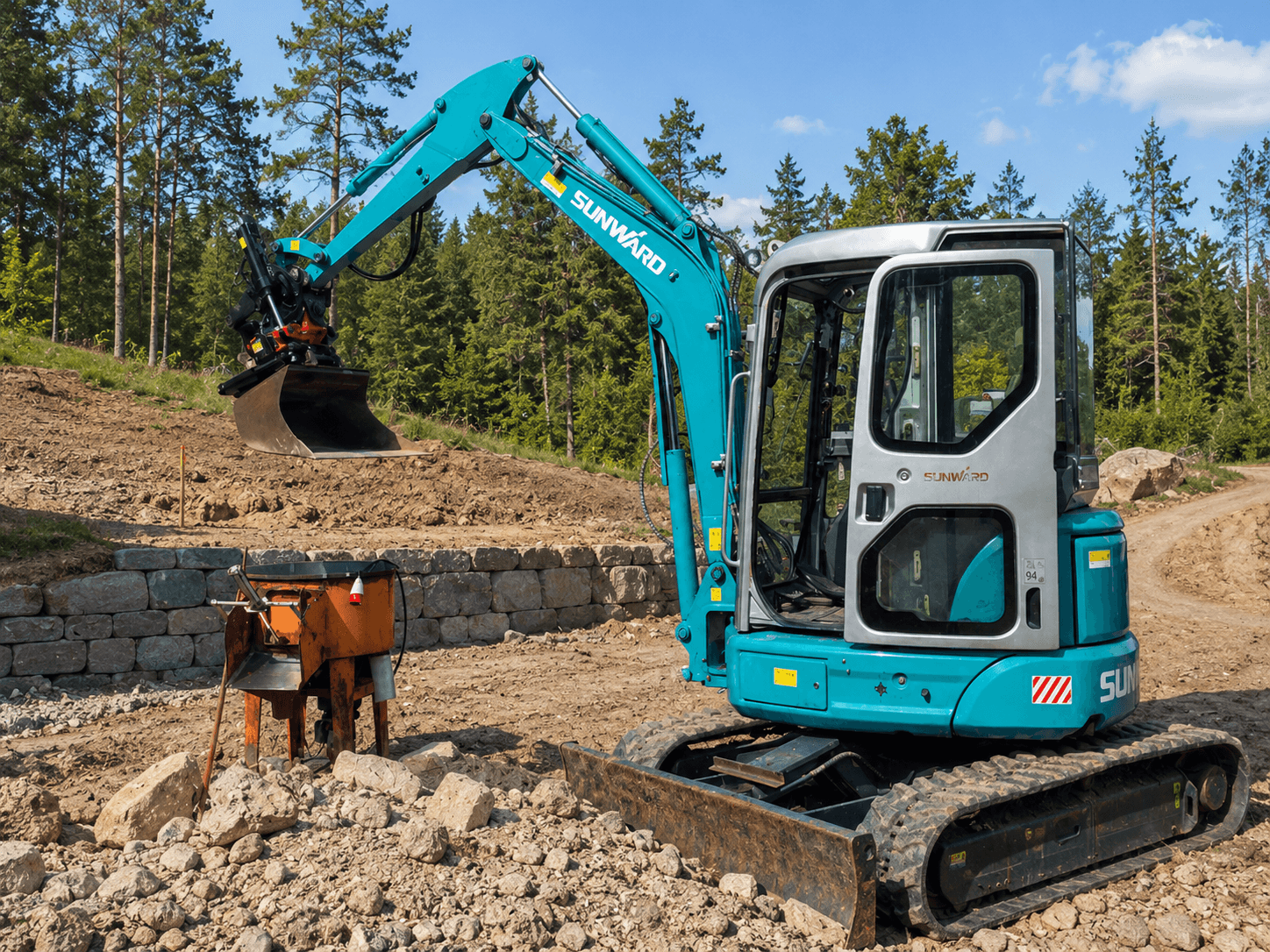
Tiltrotator vs. Power Tilt
A power tilt system normally provides lateral tilting movement at the attachment connection. It can be an effective solution for grading slopes, cleaning ditches, and adjusting the bucket cutting angle.
However, lateral tilt alone does not provide continuous rotation.
A tiltrotator combines both functions. It allows the attachment to tilt sideways and rotate around the vertical axis. This additional movement becomes useful when the working direction changes frequently or when the excavator must operate around obstacles.
For example, a power tilt can help a bucket follow the angle of a slope. A tiltrotator can also turn the bucket to work parallel to a wall, place material behind an obstacle, or approach a trench from a different direction.
The correct choice depends on the type of work. A machine used mainly for straightforward slope grading may only require tilt movement. A machine that regularly performs varied and complex attachment work can gain more flexibility from full rotation and tilt.
One Movement System for Compatible Attachments
Modern tiltrotators are not limited to one dedicated bucket. When the correct lower coupler and hydraulic arrangement are used, compatible digging buckets, grading buckets, grapples, compactors, and other tools can use the same positioning functions.
This can improve workflow efficiency because the additional movement remains on the excavator when the operator changes between compatible attachments.
Instead of relying on several specialised tools with their own tilting mechanisms, contractors can use one tilt-and-rotation system to control multiple work tools. Actual compatibility must still be confirmed according to the coupler standard, hydraulic requirements, attachment weight, and intended application.
More Controlled Working Movements
Efficiency also depends on control quality. A proportional control system allows the operator to regulate rotation and tilt according to the movement required.
Fine inputs are useful when grading beside a completed surface, working around underground services, or positioning an attachment in a restricted area. Faster movements can be used when changing the general working direction.
Smooth control can help the operator complete each pass more accurately and reduce repeated corrections. The final result still depends on correct installation, machine condition, operator experience, and suitable attachment selection.
Selecting the Correct CATSU Tiltrotator
CATSU manufactures tiltrotator systems for excavators from 1 to 26 tonnes. The correct configuration depends on more than excavator operating weight.
Before production, the excavator model, mounting dimensions, hydraulic pressure, oil flow, electrical system, coupler interface, attachment specifications, and working requirements must be reviewed.
A correctly selected CATSU tiltrotator can help reduce unnecessary machine movement, improve attachment positioning, and create a more flexible excavator workflow.
Contact CATSU with your excavator and attachment information to confirm the appropriate configuration for your machine.
Hydraulic Tilt Ditching Bucket vs. Tiltrotator: Which Improves Excavator Efficiency?
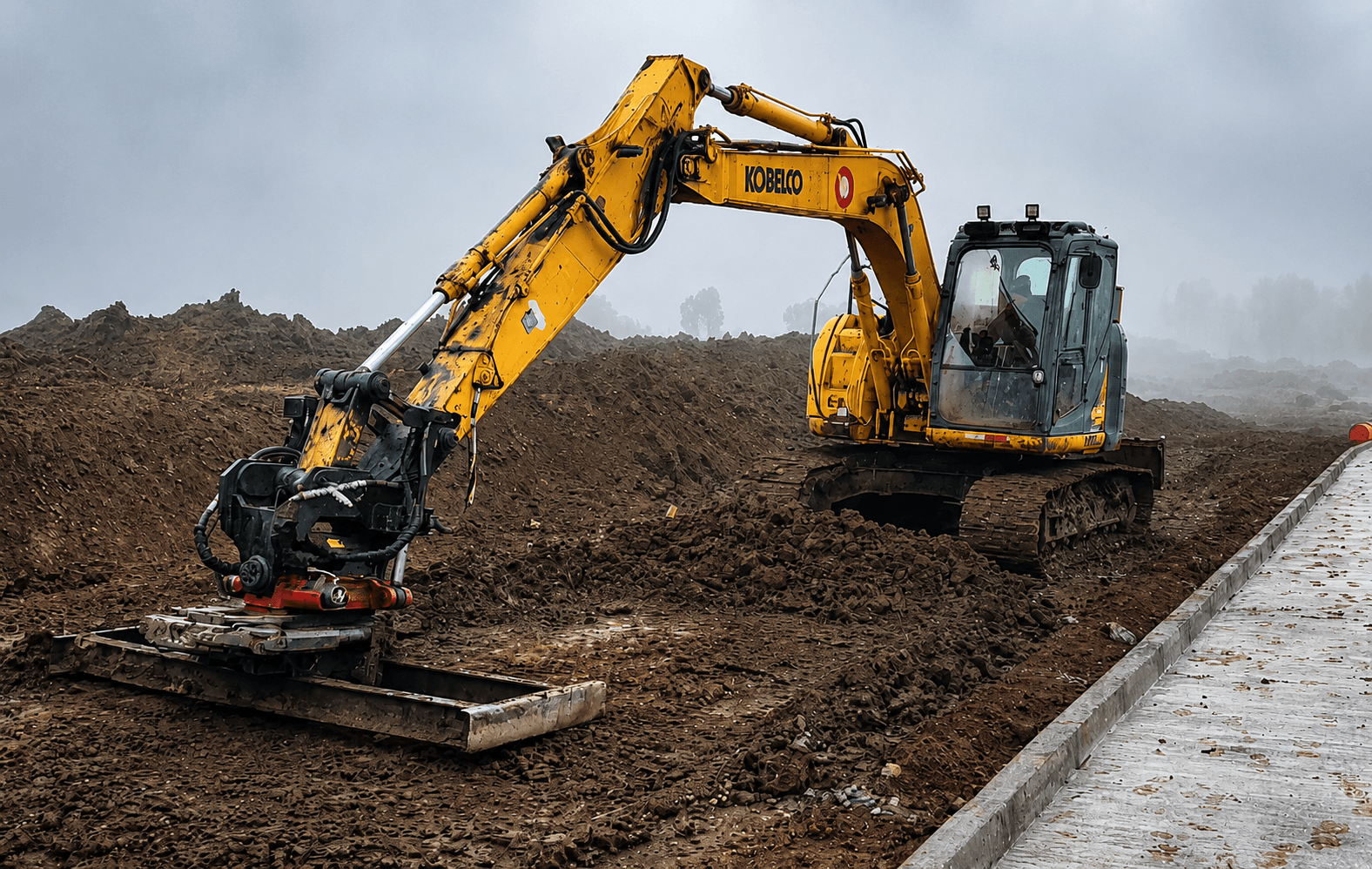
CATSU T14 Supports Tilt Grading Bucket Work on a Kobelco 140SR in Chile