Articulating Excavator Bucket: Improving Control Through Tilt and Rotation
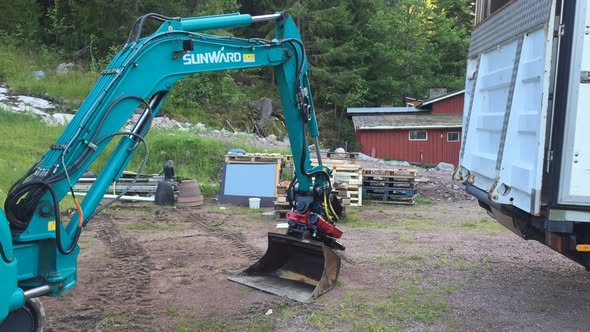
Excavators are designed to generate digging force through the boom, arm and bucket linkage. This structure is effective for conventional excavation, but the attachment normally works in the same general direction as the excavator arm.
On projects involving slopes, drainage profiles, foundations or restricted access, the operator may need the bucket to approach the material from a different direction.
This requirement has increased interest in the articulating excavator bucket and other attachment systems that provide additional movement at the working end.
The term “articulating” is used broadly. It may describe a bucket that tilts, a movable coupler or a complete tiltrotator combining rotation and bidirectional tilt. Understanding the difference is important when comparing equipment.
What Does Articulation Mean?
In mechanical equipment, articulation refers to movement between connected components.
An excavator articulating bucket normally includes a joint or hydraulic mechanism that changes the angle of the bucket relative to the arm. The available movement depends on the design.
Some buckets tilt laterally. Others use a different linkage arrangement to change the cutting angle. The term does not automatically mean that the bucket can rotate continuously.
A tiltrotator provides articulation at the attachment interface rather than building the complete movement mechanism into one bucket.
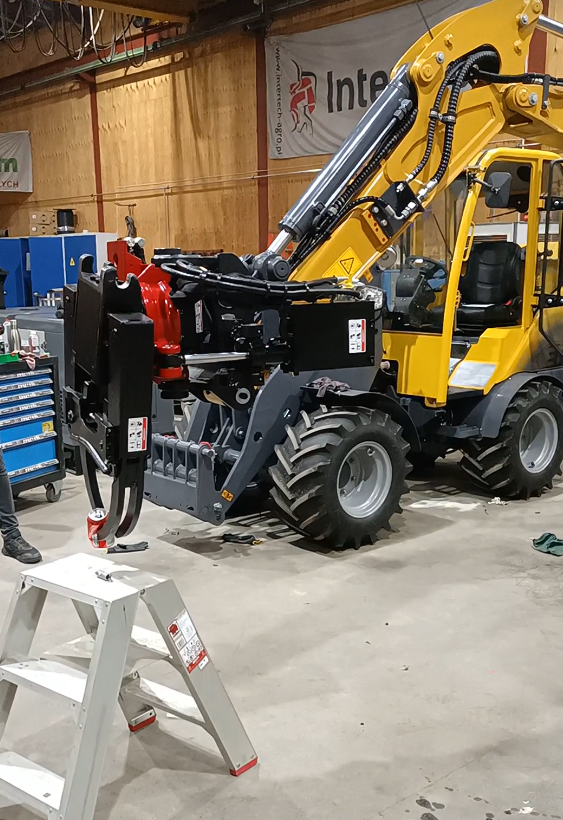
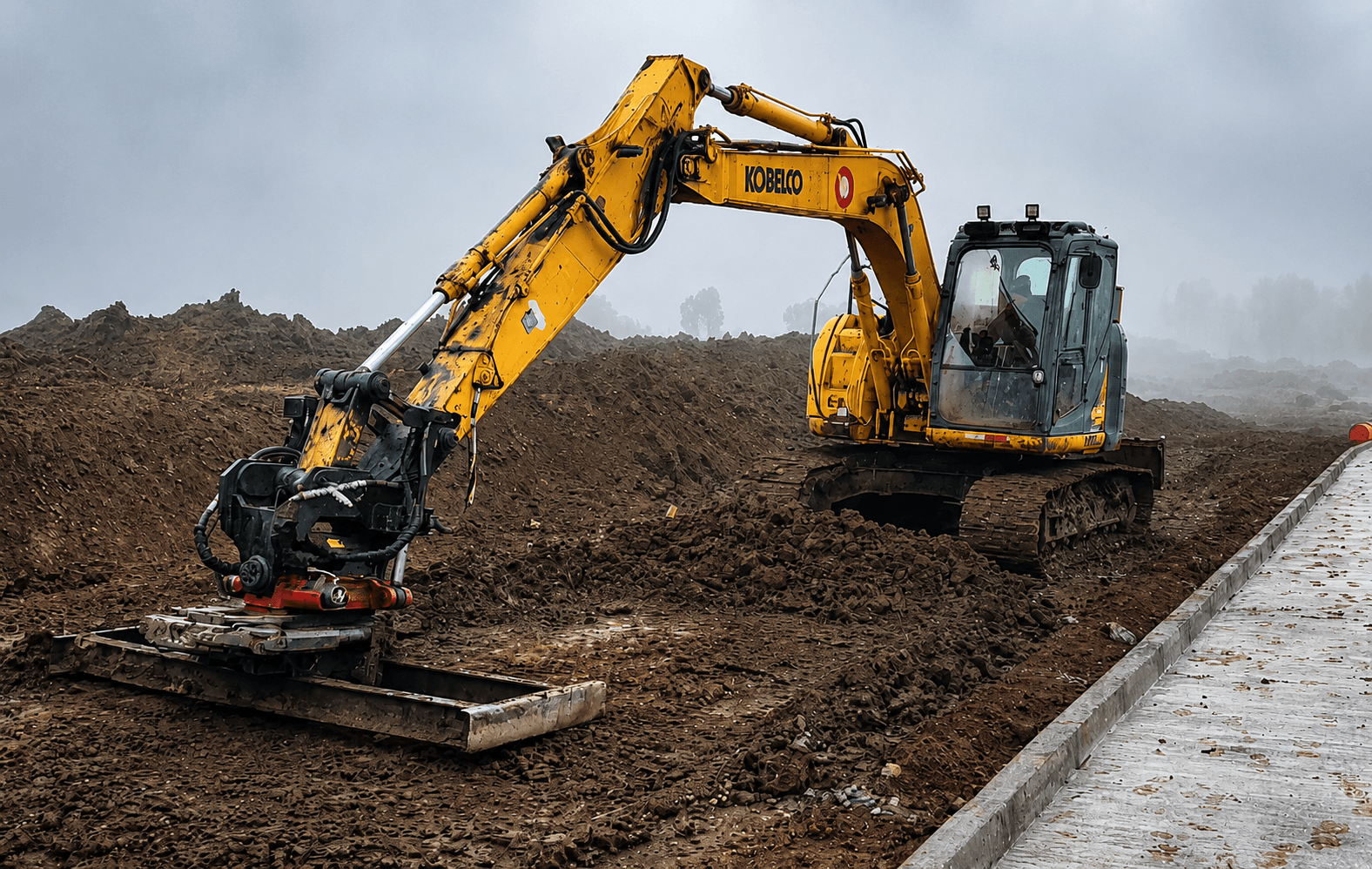
CATSU tiltrotators provide 360-degree continuous rotation and up to ±45-degree bidirectional tilt. These two movement axes allow compatible work tools to face different directions and follow changing ground profiles.
Articulating Bucket and Tiltrotator Differences
A dedicated articulating excavator bucket can be effective when the machine performs one primary task. For example, a tilting grading bucket can follow a slope without requiring the operator to reposition the tracks.
The limitation is that the movement belongs to that specific bucket.
When the operator changes to a digging bucket, compaction attachment or another compatible tool, the articulation is no longer available.
A tiltrotator places tilt and rotation above the lower attachment connection. The movement can therefore be shared by several work tools that use the correct interface.
This makes the system suitable for excavators that perform multiple tasks during the same working day.
Clarifying the Articulating Excavator Search
The search term articulating excavator can refer to more than one type of machine or component.
Some construction machines articulate through the chassis or steering system. A conventional excavator normally rotates through its upper structure and moves the work equipment through the boom and arm.
In tiltrotator applications, the relevant articulation is located at the working end.
The excavator itself does not become a different type of carrier. Instead, the attachment gains additional controlled movement below the arm.
Buyers should therefore review the technical description rather than assuming that every product using the word “articulating” provides the same operating range.
Important specifications include:
- Rotation range
- Tilt angle
- Continuous or restricted movement
- Hydraulic requirements
- Proportional control capability
- Upper and lower coupler interfaces
- Permitted excavator weight range
- Compatible attachments
These details provide a more accurate comparison than the product name alone.
Completing More Work from One Position
The main efficiency advantage of an articulated working end is the ability to adjust the tool without repositioning the carrier for every change in direction.
On a conventional setup, the operator may need to track the excavator forward, reverse, slew or reposition the undercarriage to align the bucket with the work.
A tiltrotator allows the operator to rotate the tool towards the target and tilt it to match the required angle.
This can support:
- Cutting different sides of a trench
- Grading around foundations
- Forming drainage crossfalls
- Working beneath offset edges
- Shaping embankments
- Spreading material around obstacles
- Finishing surfaces beside kerbs and walls
Fewer carrier movements can help maintain a continuous workflow and reduce disturbance to prepared areas.
The benefit is particularly relevant on narrow streets, residential developments, landscaping projects and utility sites where available space is restricted.
Improving Precision with Proportional Control
Additional movement must remain predictable.
An attachment that moves too quickly can make fine grading difficult and may increase the need for corrective passes. This is especially important when working near pipes, cables, walls or completed surfaces.
CATSU proportional control allows the operator to meter tilt and rotation through controlled joystick inputs.
The operator can make small corrections to the cutting edge rather than relying only on full-speed hydraulic movement.
This capability helps distinguish a complete tiltrotator system from a simple mechanical joint or basic excavator articulating bucket.
Precision depends on the complete system, including hydraulic flow, valve configuration, control settings, installation quality and operator experience.
Improving Attachment Utilisation
Excavators are increasingly expected to perform more than digging.
A machine may excavate a trench, place material, prepare a slope and finish the surface during one project. Each operation may require a different bucket or work tool.
If articulation is built into one bucket, only that attachment benefits from the extra movement.
With a tiltrotator, compatible attachments can share the same tilt-and-rotation capability. This can improve utilisation of both the carrier and its work tools.
The operator can select the attachment required for the task without automatically returning to a fixed working angle.
An articulating excavator bucket may remain the correct choice for a dedicated application. A tiltrotator becomes more valuable as the number of attachments and required working directions increases.
Engineering Review Before Installation
Additional flexibility does not remove the need for correct equipment matching.
The tiltrotator introduces extra height and mass between the arm and attachment. These factors influence bucket geometry, breakout performance, lifting capacity and stability.
Hydraulic hoses must accommodate the complete movement range without being pinched, stretched or exposed to excessive abrasion. Electrical wiring and connectors must also be routed securely.
CATSU reviews the excavator model, operating weight, mounting dimensions, hydraulic pressure, oil flow, electrical system, coupler standard and intended attachment list before confirming a configuration.
CATSU tiltrotators cover excavators from 1 to 26 tonnes. Final selection is based on the complete machine and application rather than operating weight alone.
Safety and Operator Familiarity
An articulated attachment changes the working envelope of the excavator.
Operators should understand how the tool moves through rotation and tilt, particularly when working near the cab, tracks, structures or personnel.
Daily inspection should include hydraulic hoses, fittings, electrical connections, fasteners, pins, coupler engagement, lubrication points and abnormal play.
The additional movement does not replace correct machine positioning, safe working procedures or attachment verification.
It provides more options after the carrier has been placed in a suitable and stable position.
A Broader Approach to Excavator Articulation
An articulating excavator search may lead to several equipment categories, but contractors looking for better attachment control should focus on the movement available at the working end.
A dedicated articulating bucket can add useful movement to one tool. A complete tiltrotator provides continuous rotation and bidirectional tilt for multiple compatible attachments.
The correct solution depends on the type of work, number of attachments, available hydraulic system and level of positioning control required.
Contact CATSU with your carrier specifications and intended applications to review the most suitable tiltrotator arrangement.
Excavator Swivel Bucket Attachment: When a Tiltrotator Adds More Flexibility
How to Choose a Bucket for Excavator Efficiency with a Tiltrotator