Beyond the Excavator Swivel Bucket: CATSU Expands Attachment Control for U.S. Jobsites
Excavation contractors across the United States are under growing pressure to complete more work with fewer machine movements, shorter site closures, and limited labor availability. From utility trenching and road construction to drainage, grading, and landscaping, the ability to position a work tool accurately has become an important part of daily production.
CATSU is addressing this demand with tiltrotator technology designed to give excavator operators greater control at the end of the boom.
For many equipment owners, the selection process begins with a simple online search for a bucket excavator setup that can work efficiently around curbs, pipes, foundations, and confined jobsite boundaries. Although the term covers a broad range of equipment, the operational requirement is clear: contractors want a bucket that can reach the correct working angle without repeatedly tracking, swinging, or repositioning the carrier.
Reducing those movements can improve cycle efficiency, limit unnecessary ground disturbance, and help the operator maintain better control in congested working areas.
Understanding Tilting and Rotating Attachments
A conventional excavator bucket tilt attachment usually allows the bucket to move laterally through a limited angle. It can be highly effective for shaping slopes, cleaning ditches, cutting drainage profiles, and finishing road shoulders.
Because the tilting mechanism is incorporated into the bucket or mounted directly above it, this type of attachment offers a relatively straightforward way to add another working axis to the excavator.
An excavator swivel bucket, depending on its construction, adds rotational movement or combines rotation with limited tilting capability. It can improve access when excavating beside structures, loading from an offset position, or placing material at an angle.
However, contractors should examine what the product description actually represents. Some attachments rotate only within a restricted range, while others provide continuous rotation. Hydraulic requirements, mounting interfaces, total installation height, bucket compatibility, and control response can also differ substantially.
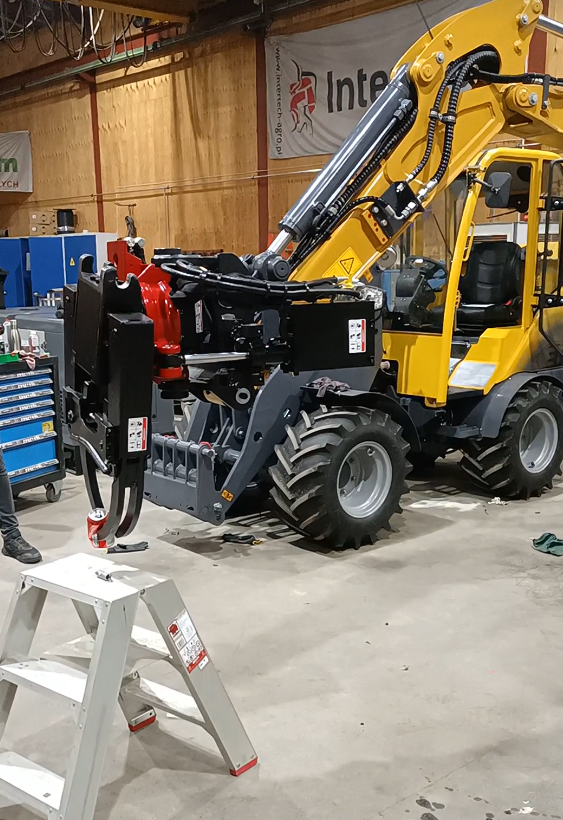
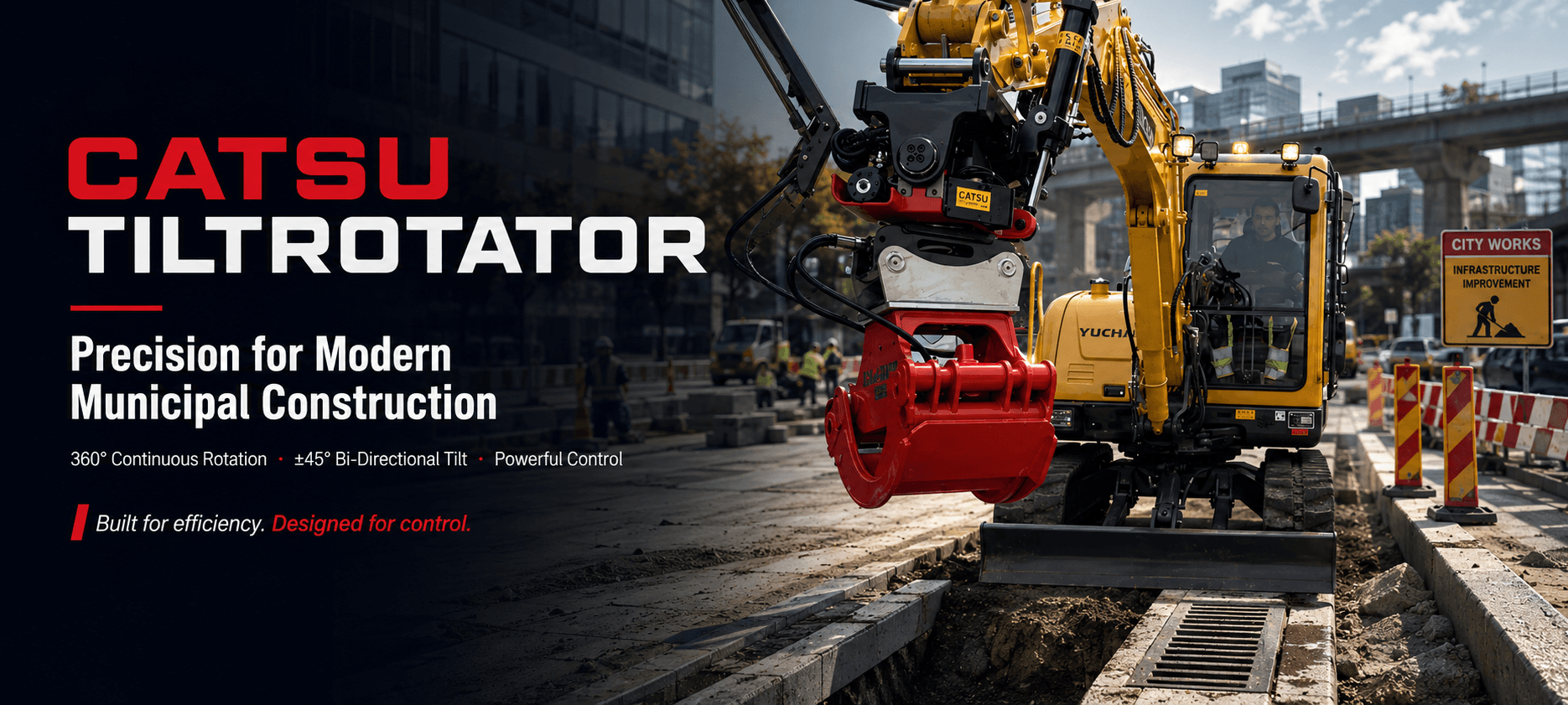
A tiltrotator takes a more integrated approach. Installed between the excavator arm and the work tool, the CATSU system provides continuous 360-degree rotation and bidirectional tilt.
Instead of assigning additional movement to one dedicated bucket, a tiltrotator makes its positioning capability available to compatible tools connected below the unit. For a contractor comparing an excavator bucket tilt attachment with a complete tiltrotator, this distinction is fundamental: one solution mainly enhances an individual bucket, while the other changes how the excavator handles a wider range of attachments.
More Control With Less Repositioning
Traditional excavation often requires the operator to align the undercarriage, boom, and arm with every new cut. On congested projects, that can mean moving around traffic-control barriers, spoil piles, landscaping, underground utilities, or recently completed surfaces.
A flexible bucket excavator configuration can reduce this dependency by allowing the cutting edge to be positioned independently from the carrier’s travel direction.
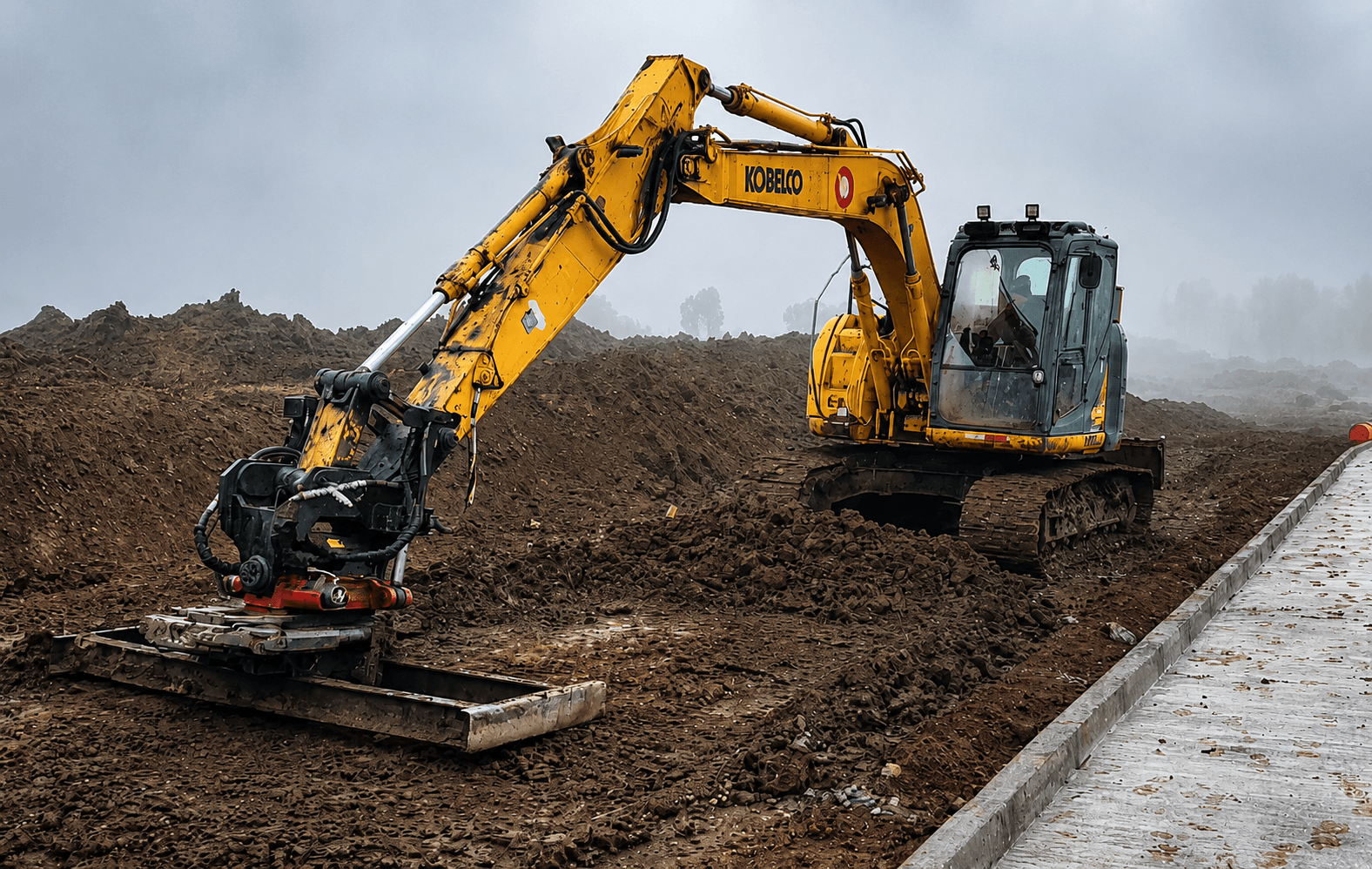
With tilt and rotation available at the attachment interface, the operator can shape an offset trench wall, grade around a manhole, clean beneath a pipe, or distribute backfill more accurately. An excavator swivel bucket can perform some of these movements, but an integrated tiltrotator provides similar positioning freedom for a broader range of compatible work tools.
The operational value is not limited to large or dramatic movements. It comes from the ability to make small and repeatable corrections without interrupting the work cycle.
This is particularly important during finish grading. Maintaining the correct cutting-edge angle affects material flow, surface quality, and the amount of rework required. An excavator bucket tilt attachment provides useful lateral adjustment, while the combined axes of a tiltrotator allow the operator to manage both working direction and inclination.
The excavator can remain on stable ground while the attachment follows a changing surface profile.
Engineering the Complete Machine Interface
Attachment selection should never be based on movement alone. The excavator, tiltrotator, couplers, bucket, hydraulic circuit, and control system must operate as one installation.
Carrier operating weight and lifting capacity are important, but so are pin geometry, hydraulic pressure and flow, auxiliary circuit configuration, electrical integration, and the intended duty cycle.
CATSU supplies tiltrotator solutions for excavators in the 1-to-26-ton class. Its proportional control system is designed to give the operator measured control of rotation and tilt instead of a simple and abrupt on-off response.
This controllability is particularly valuable when the cutting edge is working near existing utilities or when aggregate must be placed around sensitive infrastructure.
The additional height and mass of any attachment can affect machine geometry and available breakout performance. When evaluating an excavator swivel bucket or a tiltrotator, buyers should review the complete installed arrangement rather than comparing isolated component weights.
Correct machine matching helps maintain usable reach, attachment clearance, hydraulic performance, and safe handling characteristics.
Coupler compatibility is equally important. Buckets and tools should connect through the specified interface with reliable locking engagement. Hydraulic hoses and electrical harnesses require suitable routing and protection throughout the full articulation envelope.
A properly planned bucket excavator installation accounts for boom, arm, tilt, and rotation movement before the machine enters production.
Selecting the Right Solution
There is no single attachment configuration for every contractor.
If an excavator performs a narrow range of ditching and slope-finishing work, an excavator bucket tilt attachment may provide the required movement through a familiar operating concept. If the application depends mainly on rotational movement with one principal bucket, an excavator swivel bucket may be considered.
Where an excavator changes tasks frequently and must position several work tools from multiple angles, a tiltrotator can provide broader utilization.
The decision should be based on actual job cycles. Contractors can identify where the machine loses time, how frequently it must be repositioned, which attachments it uses, and how much finishing work is currently completed by hand. This produces a more meaningful specification than selecting equipment from a general feature list.
Operator familiarization also supports a successful installation. Smooth control input, appropriate tool selection, controlled movement, and awareness of the attachment envelope all contribute to productive operation.
Daily inspection should cover coupler engagement, hoses, fittings, pins, fasteners, lubrication points, and any signs of abnormal play, damage, or leakage.
A More Versatile Working End
CATSU treats the working end of the excavator as a coordinated system rather than a collection of unrelated components.
By combining continuous rotation, bidirectional tilt, proportional control, and attachment connectivity, the company aims to help operators complete complex digging and grading work with fewer machine movements.
For U.S. buyers researching a bucket excavator, comparing an excavator bucket tilt attachment, or considering an excavator swivel bucket, the most useful question is not which term appears on the product label. It is whether the complete installation delivers the movement, control, compatibility, and durability required by the application.
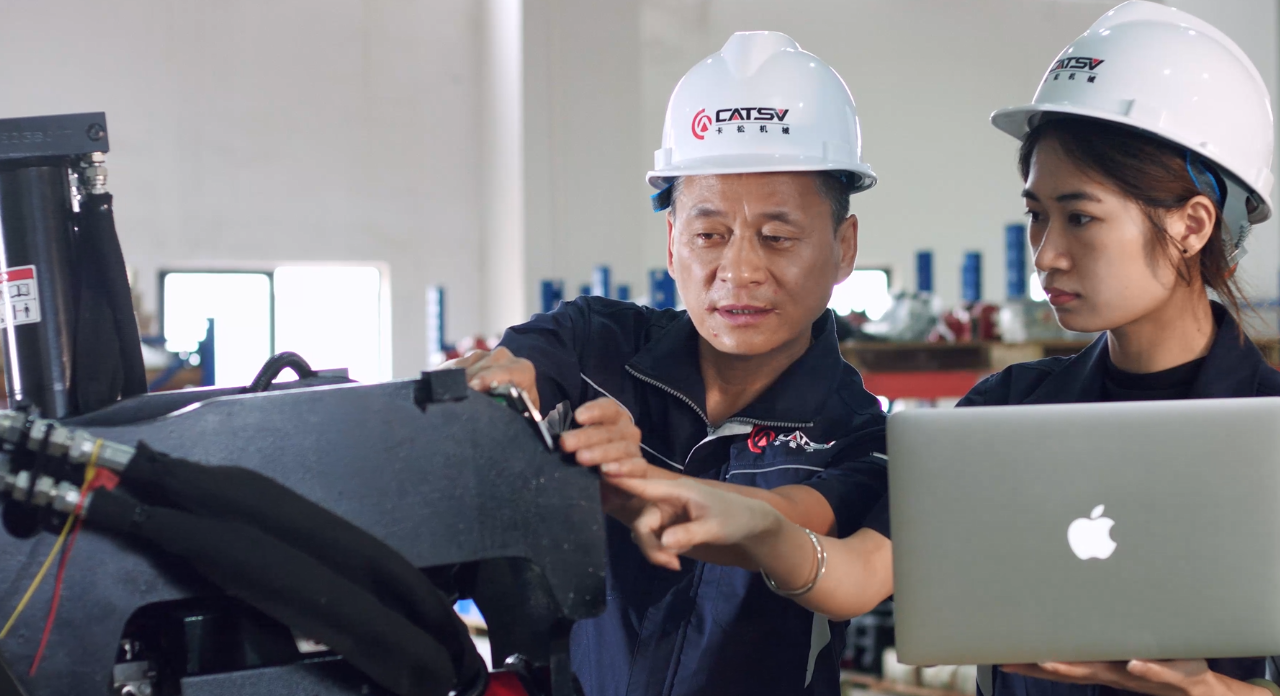
CATSU works with customers to evaluate these requirements and match the tiltrotator system to the excavator, attachment interface, and intended working conditions.
From Excavator Hitch to Tiltrotator: CATSU Supports Smarter Australian Fleets
Improving Excavation Efficiency with CATSU Tiltrotator Technology for Minibagger Applications